
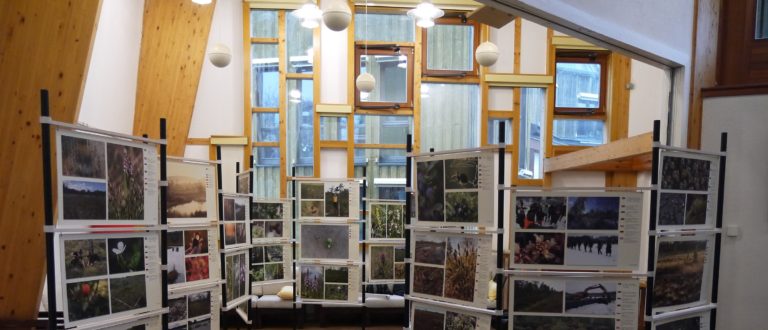
On October 21, 2019, LIFE Peat Restore held the opening of the photo exhibition ‘Restoring Peatlands for Climate’, in collaboration with Barnim District Administration, in the main administration building Paul-Wunderlich-Haus in Eberswalde. In Barnim district the German restoration site Biesenthaler Becken is located.
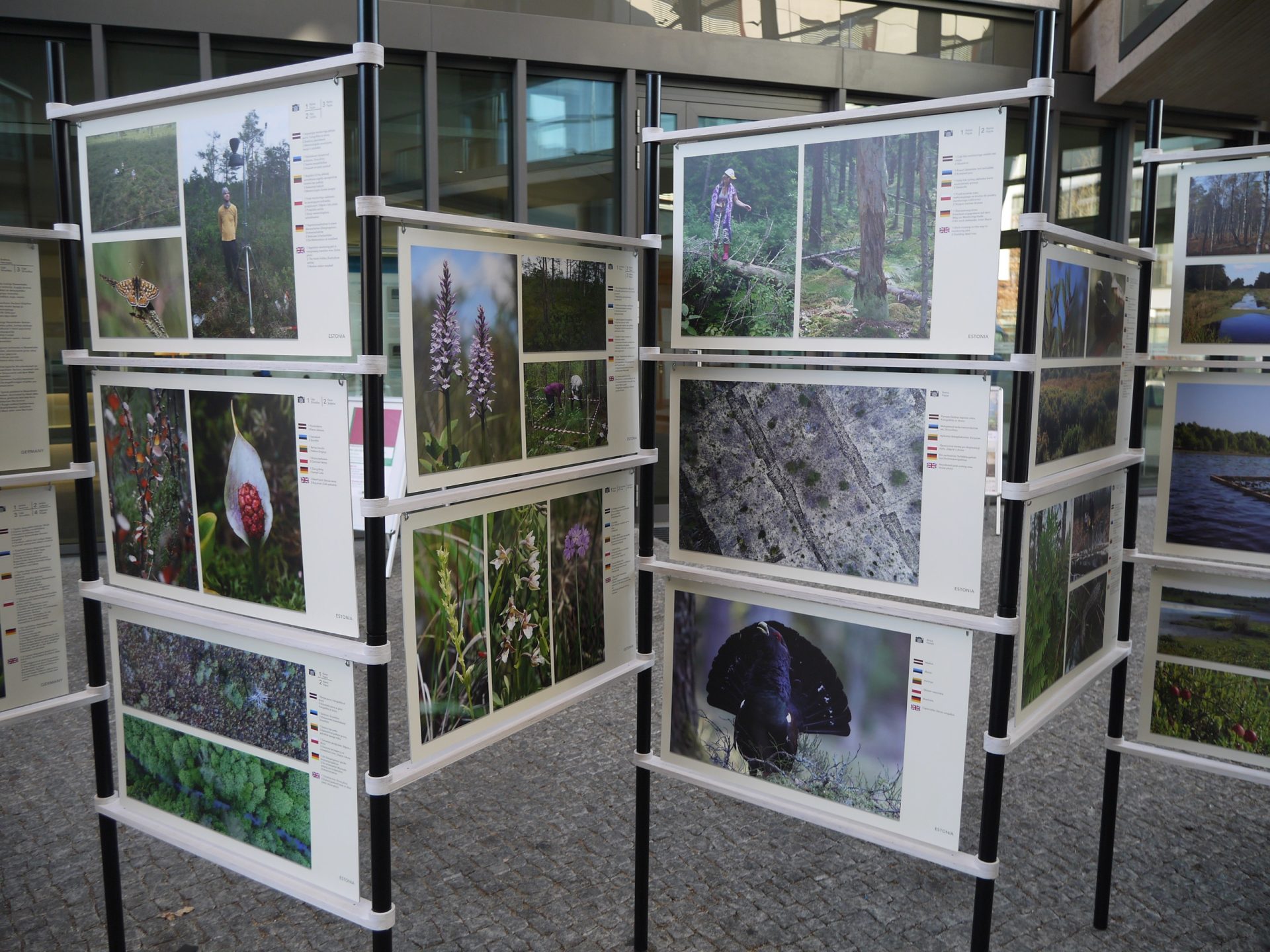
Following several displays across Latvia, organised by our project partner University of Latvia (https://life-peat-restore.eu/en/international-photo-exhibition-starts-travelling-through-five-countries/) between March and September 2019, the photo exhibition had a successful opening in Eberswalde. In addition to showcasing the beautiful landscapes of northern European peatlands, the event emphasised the crucial ecosystem functions of peatlands. See the full programme here .
Prof. Dr. Luthardt from Eberswalde University had a great presentation, where she explained to the audience the history of peatlands in Brandenburg and particularly the Barnim region, including their consistent degradation over the centuries, due to drainage and peat extraction. The professor also highlighted the significant biodiversity still found in the remaining peatland landscapes of Brandenburg, as well as their archaeological value, as they are able to record the history of humankind over millennia. Finally, she explained how peatlands in a natural state function as carbon sinks; in contrast, damaged or drained peatlands are significant sources of greenhouse gas emissions (see figure below).

Moreover, Mr. Tom Kirschey from NABU introduced the international context of LIFE Peat Restore, stating that all peatlands covering 3% of the terrestrial surface store twice the carbon stock of the total global forest biomass, stressing the importance of peatlands for the climate. He also presented the framework of collaboration between nine partners from five countries to restore 5,300 ha of degraded peatlands, going into detail with the restoration plans of in the German site in the Biesenthaler Becken (see the presentation here).
After the presentations, there was time to address questions from the audience, which gave way to some lively discussions. Undoubtedly, both presentations promoted a greater understanding of the importance of protecting and restoring peatlands.
The photo exhibition stayed in the Paul-Wunderlich-Haus in Eberswalde until October 30th and was then displayed as a short version on NABU’s National Delegates Assembly in Berlin on November 9th and 10th.
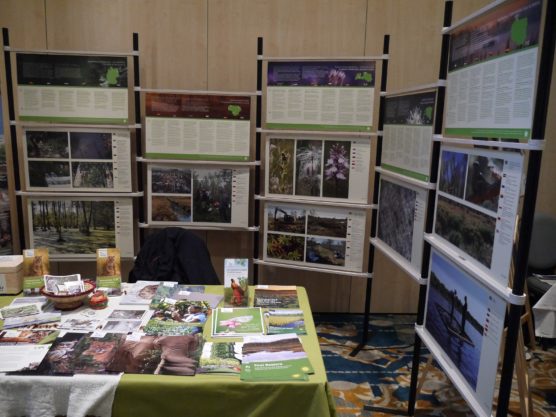
From November 11th to 25th the photo exhibition was hosted in the NABU-Nature-Experience-Centre Blumberger Muehle (http://www.blumberger-muehle.de/). There it received a lot attention, especially during the whole-day event “Climate change and its consequences” on November 23rd.
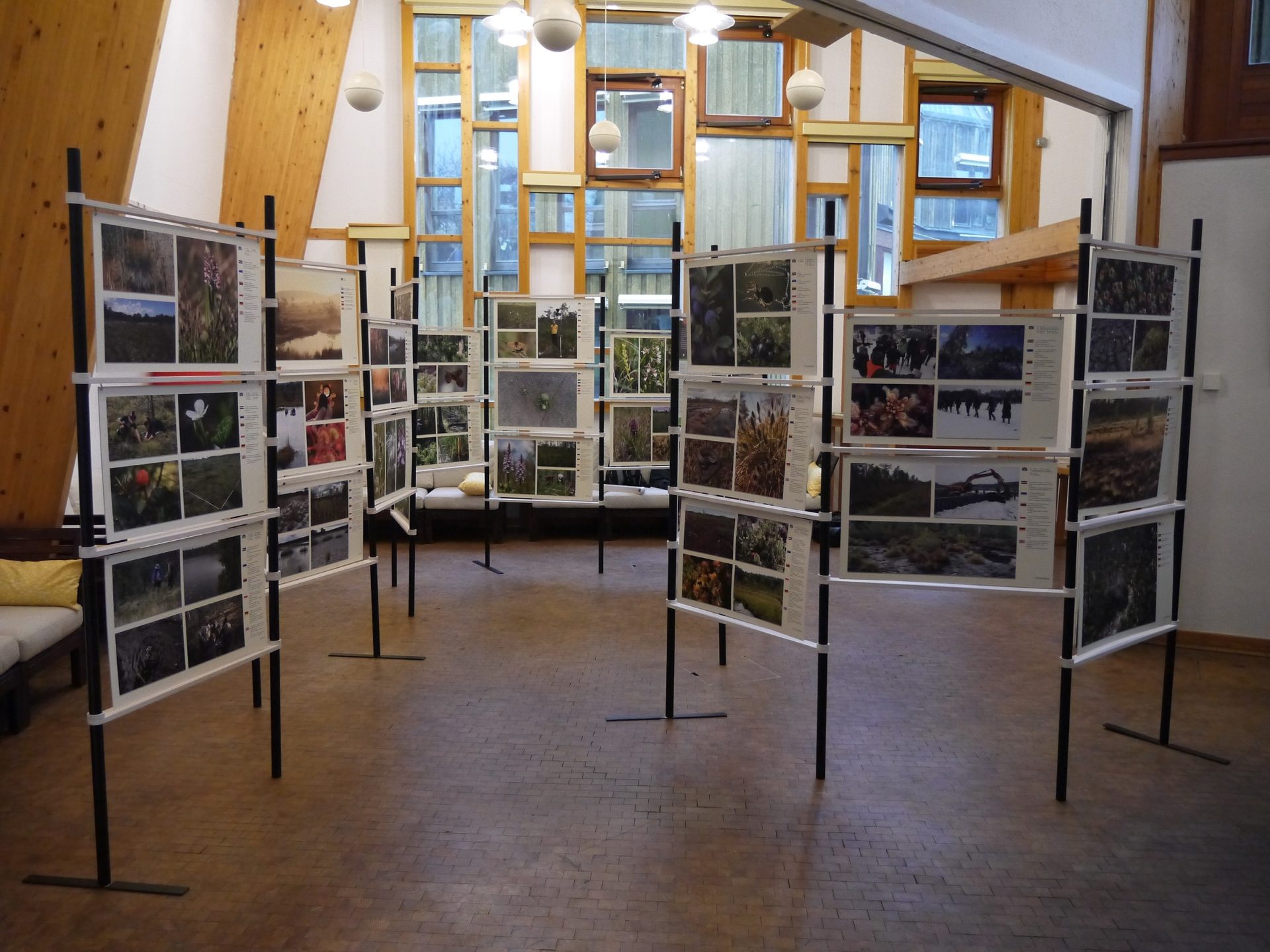
On November 25th the exhibition returned to Eberswalde, this time being displayed until December 13th in the Eberswalde University for Sustainable Development. It was promoted during the International Climate Week (November 25th to 29th) of the Fridays for Future movement (https://pcs.fridaysforfuture.berlin/events/categories/hochschule-nachhaltige-entwicklung-eberswalde/). The exhibition was well placed in the foyer of the university’s conference hall, where at the time two major events took place:
– On November 29th the conference „With sufficiency to a good life – a contradiction to today’s society?” (http://snm-hnee.de/2019/10/mit-suffizienz-zu-einem-guten-leben-ein-widerspruch-zur-heutigen-gesellschaft-29-11-19-save-the-date/)
– 14. Master Class Course Conference “Renewable Energies”, December 2nd-6th (https://www.hnee.de/de/Forschung/Wissenschaftliche-Tagungen/MCCC-Renewable-Energies/14.-Master-Class-Course-Conference-Renewable-Energies-Noch-zu-klein-Die-groe-Transformation-E10028.htm)
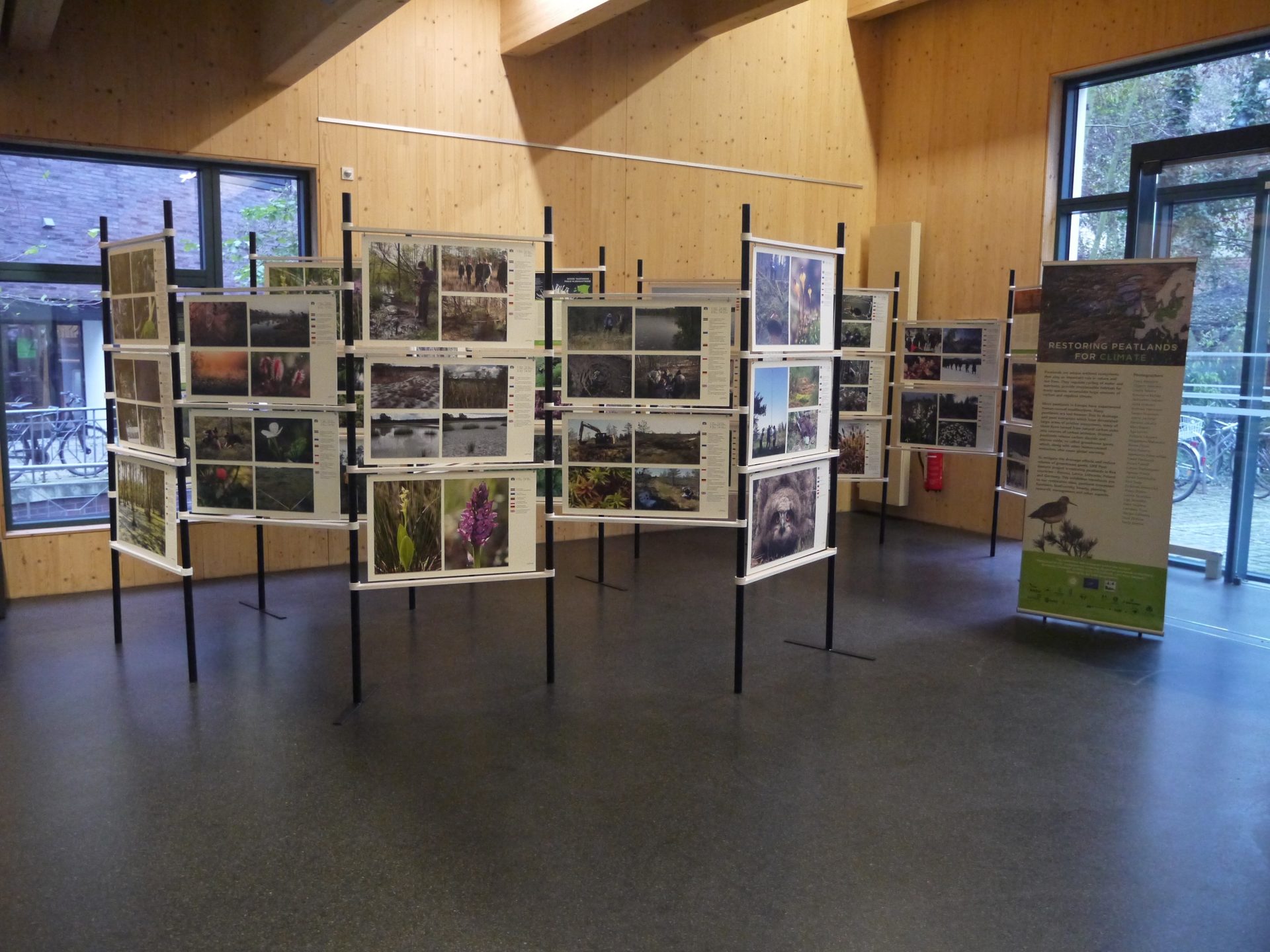
From January 8th to 14th the exhibition will be shown in the NABU-headquarters in Berlin. Finally, there will be a closing event on January 15, 2020, co-hosted by the Embassy of Estonia, where a panel discussion will also take place, with a focus on national strategies for peatland restoration and phase-out of peat extraction (see here). More details on the panel discussion at the Embassy coming soon.
Related publications:
Leave peat in peatlands (https://life-peat-restore.eu/en/wp-content/uploads/sites/7/2018/05/leave-peat-in-peatlands-final.pdf)