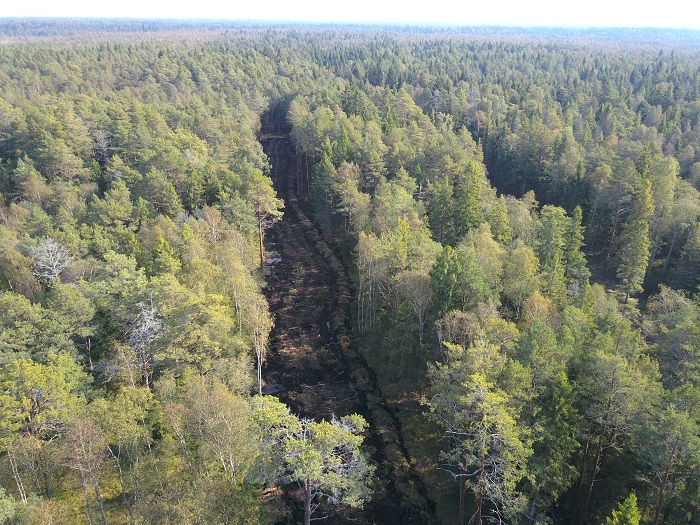

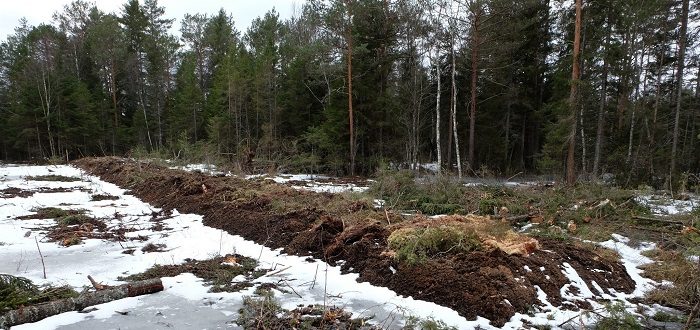
In March 2021, the restoration of the water regime, which lasted 8 months, was completed in Suursoo-Leidissoo in Estonia. The Suursoo restoration area (approx. 3 300 ha) is one of the largest wetland restoration areas and the largest fen restoration area in Estonia. Up to four excavators worked at the same time. Although the conditions on the soft surface were quite complicated in some places and the heavy equipment tended to sink, the company Timberston ehitus OÜ, which had performed the work, still managed to do what was necessary. A total of 173 dams and 12.4 km of peat dams were built to block the 45 km long ditch network.
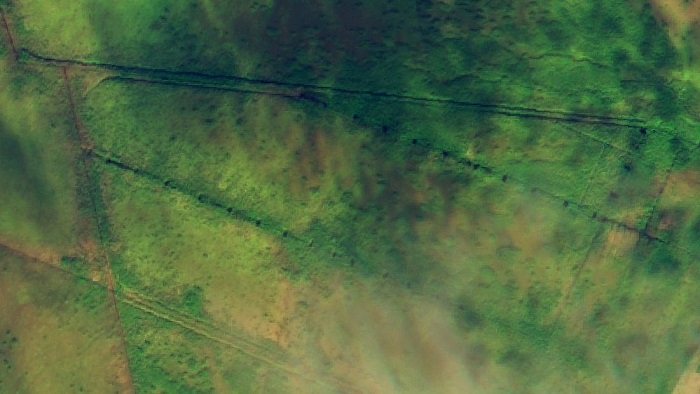
As the Piirsalu River and the Kaldamäe stream straightened into a ditch have been protected as spawning streams for salmonids, they could not be dammed. However, in order to raise the water level in peatland, peat dams were built along these ditches. These dams prevent the drainage of water from the peatland. Additionally, a 2.7 km long overgrown section of the Kaldamäe stream was opened for fish migration.
All dams were built of peat, no wood or artificial materials were used in the restoration works. The restoration work has been carried out on the principle that the restoration area and the dams and other facilities therein do not require further maintenance. The restoration works created the preconditions for the restoration of the intestinal water regime, and now it is to be expected and hoped that flora and other biota will also come with it. The recovery of peatland ecosystems is a long-term process that will take at least decades. Along with the mire vegetation, the accumulation of peat and carbon sequestration is also restored, which is the main goal of the LIFE Peat Restore project. As the pace and success of the recovery of wetland water regimes, ecosystems and greenhouse gas balances is difficult to predict, the restoration must be followed by thorough and long-term monitoring.