
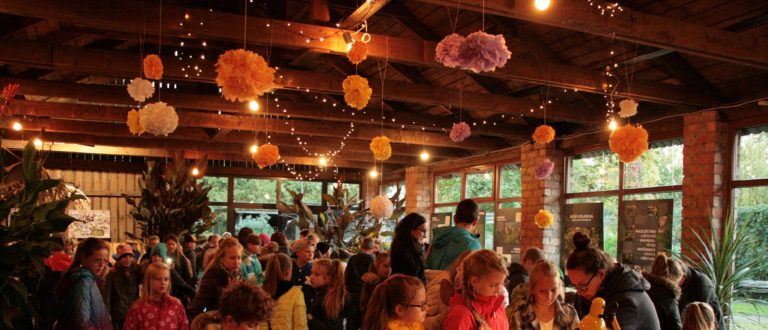
Since 2005, European Researchers’ Night has been organized on every last Friday of September. This year, on September 28, the event was hosted by the Botanical Garden of the University of Latvia in Riga. Cultural heritage was chosen as the topic for 2018.
LIFE Peat Restore team participated by creating the Mire laboratory, among several other activities. Important issues, like the impact of land use types and their intensity on soil quality, part of traditional landscape, were discussed in enticing ways.
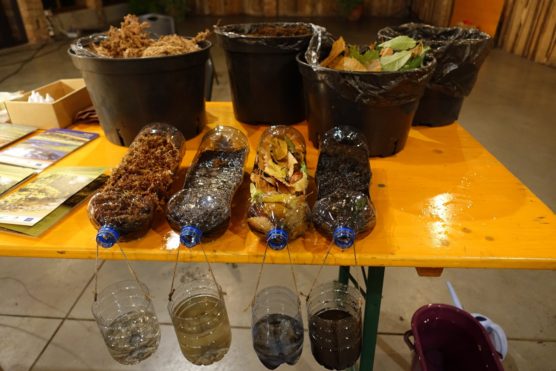
A simple experiment using four different models showed soil depletion intensity in agricultural land and peat extraction field compared to forest soil and intact bog. After the experiment, all participants agreed that sustainable land management must include not only efficient agriculture, but also nature conservation.
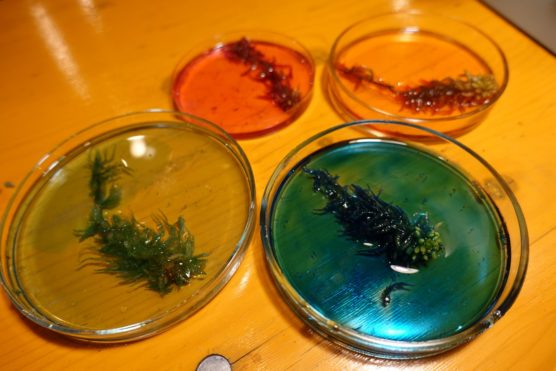
In the Mire laboratory, another activity was organized to visually evaluate the effect of different chemical dyes to microscopic samples of sphagnum mosses. Methylene blue, malachite green and Congo red stains were approved as the most suitable pigments for hyaline cell research.
Already, it is the ninth time the Botanical Garden participates in the European Researchers’ Night, receiving nearly 400 visitors this year, mostly pupils and families with children. Guided tours celebrating the 90th anniversary of the Glass houses, as well as explanations of nutrient and water uptake in plants, flower origami, coffee painting on palm tree leaves and plaster cast of fruits and seeds were offered to every visitor.