

SER Europe conferences are held every two years in different cities of European countries. This time it was held in Reykjavík, Iceland. These conferences are dedicated to ecological restoration in different fields – peatlands and other habitats, and plant and animal species. The focus of the SER Europe 2018 was on the goals and methods of ecological restoration to mitigate climate change.
On SER Europe 2018 much attention was given to restoration of peatland habitats. In Iceland, peatlands have been used for sheep, horse and cattle grazing since the island was inhabited in the 870 AD by Vikings. Peatland turf was the building material for a long time. Icelanders are taking care of their peatlands nowadays – number of sheeps has been reduced and drainage ditches will be closed to reduce greenhouse gas emission. The main aim of ecological restoration in Iceland is the restoration of forests. Around 50% of Iceland was covered by forests before settlement by the Vikings, nowadays it does not exceed 5%.
The conference, of course, covered other areas. For example, this year SER Europe showed greater interest on ecological problems in Africa: https://sere2018.org/program/.
The Estonian team from the LIFE Peat Restore project – Mati Ilomets, Raimo Pajula, Laimdota Truus – introduced the first results of the project in an oral presentation https://www.eventure-online.com/eventure/admin/showFrontPublic.form?cuuid=21eaa7ed-6c8e-43d1-984c-1d09ef0bd064#) and on two poster presentations: https://www.eventure-online.com/eventure/admin/showFrontPublic.form?cuuid=21eaa7ed-6c8e-43d1-984c-1d09ef0bd064# and https://www.eventure-online.com/eventure/admin/showFrontPublic.form?cuuid=21eaa7ed-6c8e-43d1-984c-1d09ef0bd064#.
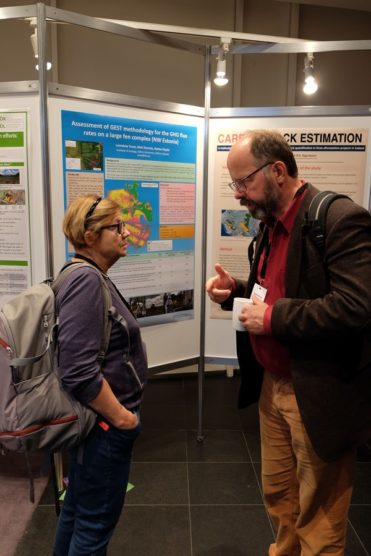

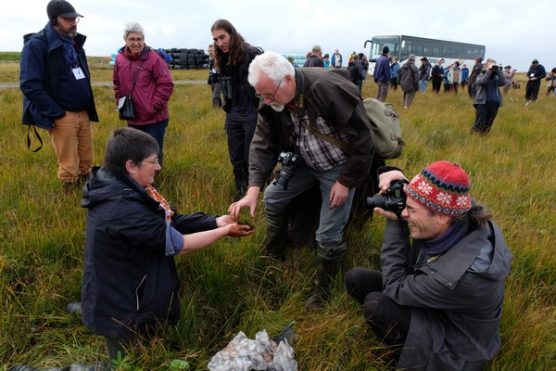
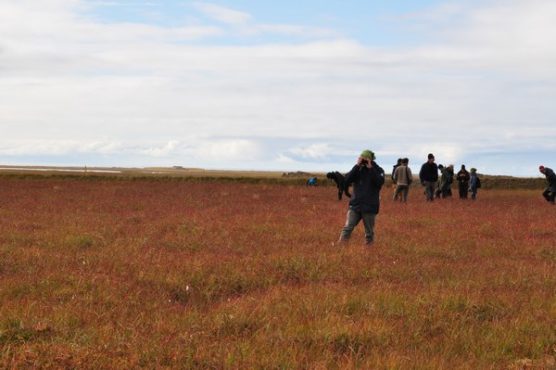
All three participated on sessions of the conference and on the mid-conference tour to Snæfellsnes and Borgarfjörður, West Iceland. This excursion covered a range of topics, including wetland and heathland degradation and restoration, invasive species, and the restoration of near-extinct bird species.
All three team members made useful contacts and met with old collegues from other countries. The discussions held with John Cowenberg on GEST, with Tatjana Minjajeva on mire restoration, and with Kari Minkkinen and Paavo Ojanen on GHG emission reduction, were especially relevant. Also, fruitful was Raimo’s participation on the workshop ‘Easy to use software for hydrologically sensitive projects’ , held by colleagues from the Estonian State Forest Management Centre – the methodology is directly taken over for modelling of water movement at the Suursoo project site. The method enables to identify the right places for dams as well as to foresee the water regime after the building dams.